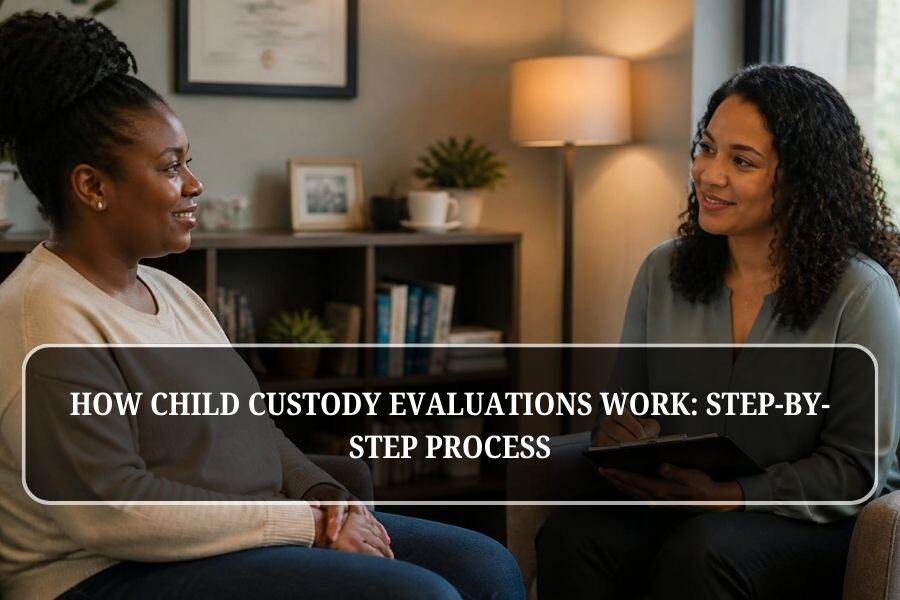
If you are involved in a custody dispute, a termination of parental rights case, or a DCFS matter, you may be required to complete a child custody evaluation. For many parents, this process feels overwhelming and uncertain.
This guide explains exactly how child custody evaluations work, what evaluators look for, what the possible outcomes are, and how AACS Counseling can help you through every step.
What Is a Child Custody Evaluation?
A child custody evaluation, also called a Child Custody Fitness Assessment, is a comprehensive psychological evaluation used to assess a parent’s or guardian’s capacity to care for their child. A court typically orders it as part of a custody dispute, termination of parental rights case, or DCFS matter.
The evaluation is not designed to punish either parent. Its explicit purpose is to determine what arrangement best serves the welfare and safety of the child. Every recommendation made by the evaluator is based on the best interest of the child, not the preferences of either parent.
The court holds the mental and physical state of each parent in extremely high regard. Courts have a duty to protect the welfare and safety of children, and the child custody evaluation is one clinical method used to inform that decision.
When Is a Child Custody Evaluation Required?
A child custody evaluation is most commonly required in:
- Divorce and custody disputes
- Termination of parental rights cases
- Modification of existing custody arrangements
- Cases involving allegations of abuse, neglect, or substance use
- High-conflict custody and co-parenting situations
- DCFS cases where a parent must demonstrate fitness to regain access to their child
What Evaluators Look For
A thorough child custody evaluation examines parent-related, child-related, and family-related factors. Evaluators do not just assess the parent being evaluated; family members and acquaintances may also be asked to provide information to support a well-rounded determination.
At AACS Counseling, it is standard practice to obtain notarized statements from multiple individuals to better determine appropriate child custody placements.
Parent-Related Factors
- Emotional and psychological stability
- Parenting style and capacity
- Substance use history, current and past
- Previous involvement with child welfare agencies
- Willingness to cooperate with the other parent in raising the child
Child-Related Factors
- Mental health and emotional well-being
- Attachment to each parent
- Child’s preferences regarding custody or living arrangements where age-appropriate
Family-Related Factors
- History of domestic violence
- Allegations of abuse or neglect
- Allegations of parental alienation
- Family dynamics and support systems

Step-by-Step: How the Evaluation Works
The child custody evaluation process is structured and thorough. It may be completed in one session or across multiple sessions depending on the complexity of the case. Here is exactly what happens:
Step 1: Initial Interview
The evaluator begins with a detailed clinical interview covering family background, custody concerns, legal history, and the circumstances surrounding the case. Both parents may be interviewed separately. This conversation establishes the context for everything that follows.
Step 2: Clinical Assessments
Evaluators use validated, evidence-based assessments to measure specific conditions objectively rather than relying on impressions alone. Depending on your situation, this may include standardized psychometric assessments evaluating mental health functioning, substance use, anger management, emotional stability, and parenting capacity.
Step 3: Collateral Information
The evaluator may gather information from additional sources beyond the parent being evaluated. This can include notarized statements from family members, acquaintances, or other individuals who can provide relevant context about the parent’s ability to care for the child. Court records, prior evaluations, and other documentation may also be reviewed.
Step 4: Child Interview (Where Applicable)
In some cases, the child may be interviewed to assess their emotional well-being, attachment to each parent, and preferences regarding custody or living arrangements, where age-appropriate. The child’s safety and comfort are always the priority during this step.
Step 5: Written Report
Following the evaluation, a formal written report is prepared documenting all clinical findings and recommendations. Reports are prepared in a court-ready format designed to meet the reporting standards of family court judges, attorneys, and guardian ad litem professionals. This report is submitted to the court and all relevant parties.
What Are the Possible Outcomes?
Recommendations from a child custody evaluation vary from case to case. The evaluator’s recommendations always focus on what arrangement best serves the child’s welfare and safety. Possible outcomes include:
- Custody awarded to one parent
- Shared or joint custody arrangement
- Supervised visitation for one parent
- Recommendation for substance abuse treatment before custody is granted
- Recommendation for mental health treatment or counseling
- Recommendation for anger management or other specific programs
These recommendations can become court requirements if the judge deems them essential for a parent to gain or regain access to their child. Completing any recommended program is the pathway forward.
Real-World Example
Jenny and Mark had been married for almost seven years and had two daughters, ages five and two. Their relationship had become strained, and during a difficult night, Mark was filmed yelling at their children after one of them knocked over a vase. Jenny’s attorney presented the video as evidence that Mark’s relationship with alcohol made him unfit for custody.
The judge ordered both parents to undergo a Child Custody Fitness Assessment. The evaluators recommended that Mark complete an ASAM Level I treatment program for 17 sessions to address his drinking. After Mark completed the recommended treatment, the judge decided on 50/50 custody. The evaluators found the incident to be isolated and identified no other substance abuse or mental health issues that would prevent Mark from being a capable father.
This example illustrates how evaluators base every recommendation on the welfare of the children, not on punishing either parent. Completing the recommended program opened the path to shared custody for Mark.
Virtual Evaluations
AACS Counseling offers secure virtual child custody assessments via telehealth. Virtual evaluations are:
- Conducted via secure, confidential video conferencing
- Accepted by many family courts
- Available same-day and next-day
- Ideal for families balancing legal deadlines, work schedules, and childcare
- Available in English and Spanish
How Much Does a Child Custody Evaluation Cost?
AACS Counseling offers child custody evaluations at $600. Flexible payment and financing options are available.
Given the stakes involved in a custody case, completing a professional, court-accepted evaluation is one of the most important steps you can take. Do not delay. Custody cases move on court timelines.
Frequently Asked Questions
What is a child custody evaluation?
A child custody evaluation is a comprehensive psychological evaluation used to assess a parent’s capacity to care for their child. A court typically orders it as part of a custody dispute, termination of parental rights case, or DCFS matter. The ultimate priority is always the best interest of the child.
Who conducts the evaluation?
Licensed behavioral health professionals conduct evaluations. At AACS Counseling, evaluations are performed by licensed professionals with over 25 years of experience serving courts, families, and legal professionals.
Do both parents need to participate?
In most cases, the court can order both parents to undergo the evaluation. The mental health and parenting capacities of both parents are relevant to the custody determination.
Can children be interviewed during the assessment?
Yes, in some cases. The child may be interviewed to assess their emotional well-being, attachment to each parent, and preferences regarding custody where age-appropriate. The child’s comfort and safety are always the priority.
Can substance use affect custody decisions?
Yes. Substance use history is one of the key factors evaluators assess. However, a substance use issue does not automatically result in loss of custody. Evaluators look at the full clinical picture. Completing a recommended treatment program can open the path to custody or visitation.
What if one parent refuses to participate?
If a court has ordered the evaluation, refusal to participate can negatively affect that parent’s standing in the case. Courts view non-compliance unfavorably when making custody determinations.
Is the evaluation confidential?
The evaluation is conducted in a confidential manner. However, the written report is submitted to the court and relevant parties as required by the legal process.
Do virtual evaluations carry the same weight as in-person?
Yes. AACS Counseling’s virtual evaluations are conducted via secure, confidential video conferencing and are accepted by many family courts. The clinical process and report quality are identical to in-person evaluations.
How much does a child custody evaluation cost at AACS Counseling?
AACS Counseling offers child custody evaluations at $600. Flexible payment and financing options are available. Call 800-683-7745 to discuss payment arrangements.
Are additional evaluations sometimes required?
Yes. In some custody cases, courts or DCFS may also require an alcohol and drug evaluation or a mental health assessment. AACS Counseling provides all of these services so families can meet all court requirements with one trusted provider.
Conclusion
A child custody evaluation is one of the most important steps in any custody case. Understanding the process ahead of time, including what evaluators look for, how the evaluation is conducted, and what the possible outcomes are, helps you approach it with clarity and confidence.
Every recommendation made during the evaluation is based on one thing: the best interest and well-being of your child. Completing the process honestly and promptly is the strongest step you can take.
AACS Counseling provides professional, court-accepted child custody evaluations with same-day and next-day appointments available. Virtual and in-person options are available. Bilingual staff are available in English and Spanish. Flexible payment options are also available.
Schedule Your Child Custody Evaluation Today
Call 800-683-7745 or contact AACS Counseling to book your evaluation. Do not delay. Custody cases move on court timelines.